
How Executive Resume Writing Services Improve Recruiter Visibility
September 19, 2026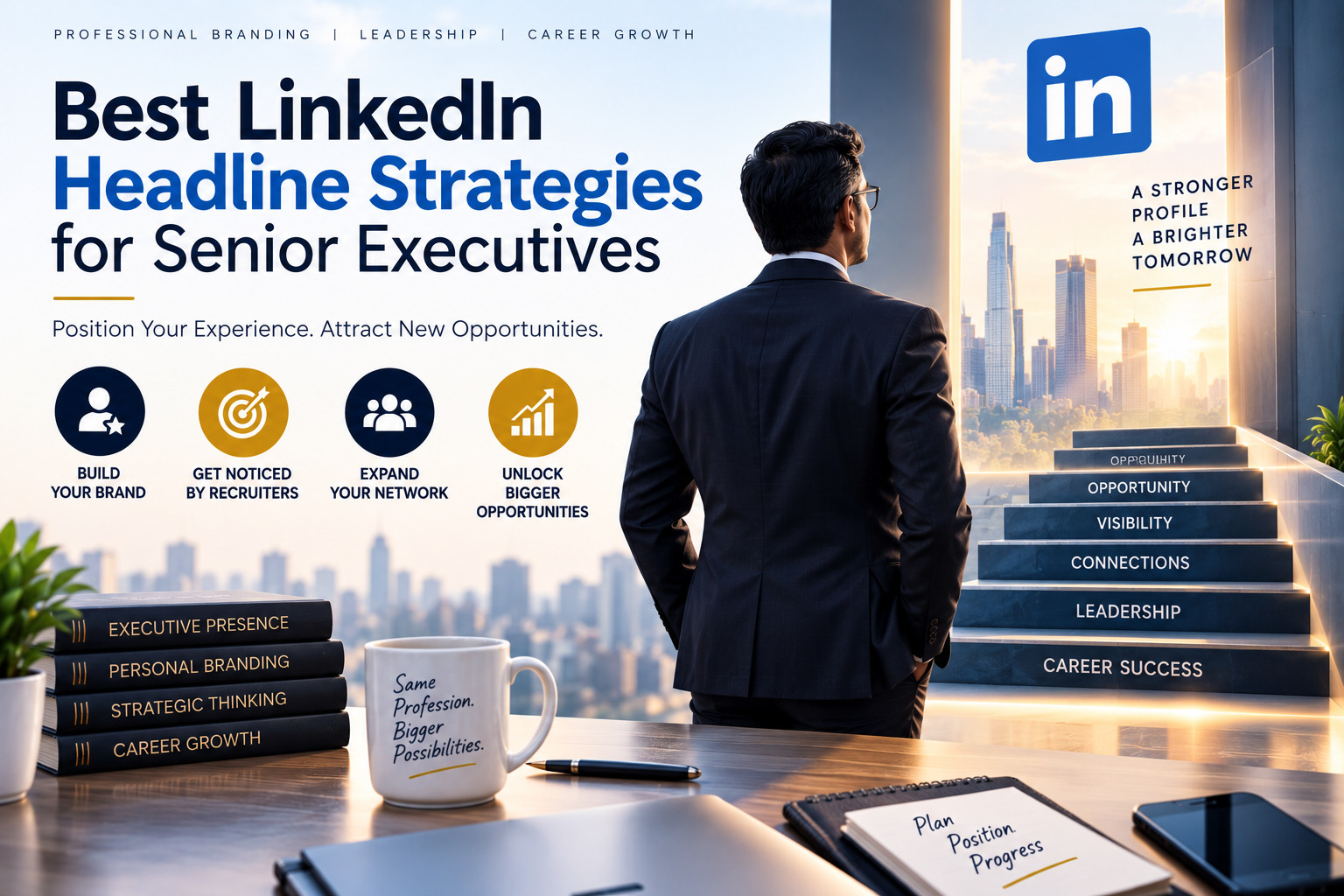
For senior executives, LinkedIn is more than an online professional profile. It is an important personal branding platform that can help communicate leadership experience, expertise, achievements, and career direction. One of the first elements recruiters notice is the LinkedIn headline. A well-written headline can quickly explain who you are, what you specialize in, and the value you bring to an organization.
For CEOs, directors, vice presidents, CXOs, senior managers, and experienced professionals, developing an effective LinkedIn headline should be an important part of a professional LinkedIn profile makeover.
Why Is a LinkedIn Headline Important for Senior Executives?
Your LinkedIn headline appears alongside your name in search results, connection requests, comments, and professional interactions. It therefore provides an opportunity to communicate your executive positioning even before someone opens your complete profile.
A generic headline such as “CEO at ABC Company” may communicate your current position but does not necessarily explain your expertise. A more strategic headline can include your leadership area, specialization, and professional strengths.
1. Include Your Executive Role
Start with your current or target professional role. This helps recruiters and industry professionals immediately understand your level of responsibility.
For example:
Chief Executive Officer | Business Strategy | Growth & Transformation
The role provides context, while the additional terms communicate areas of expertise.
2. Highlight Your Core Expertise
Senior executives often have specialized knowledge that differentiates them from other candidates. Include relevant areas such as:
- Business Strategy
- Digital Transformation
- Operations
- Technology Leadership
- Revenue Growth
- Product Strategy
- Global Expansion
- Change Management
Choose expertise that accurately represents your professional background and target opportunities.
3. Use Relevant Keywords
LinkedIn profiles can be discovered through searches involving job titles, skills, industries, and areas of expertise. Including relevant keywords naturally in your headline can make your professional positioning clearer.
Avoid keyword stuffing. Select terms that genuinely match your experience and the roles you want to pursue.
4. Communicate Your Professional Value
An effective executive headline should answer a simple question: What value do you bring?
Instead of only listing your position, consider communicating your focus or impact.
For example:
Technology Executive | Digital Transformation | Building Scalable Technology & High-Performance Teams
This provides more context than a job title alone.
5. Align Your Headline With Your Career Goals
Your headline should support your current career direction. If you are targeting board positions, consulting opportunities, international leadership roles, or a new industry, your headline can reflect those objectives where appropriate.
Make sure the headline remains truthful and does not suggest experience or qualifications you do not possess.
6. Keep It Clear and Professional
Senior executives should avoid overly complicated headlines. Recruiters should be able to understand your professional identity quickly.
Use separators such as “|” to organize different elements and keep the wording concise. Avoid excessive buzzwords that do not communicate specific expertise.
7. Keep Your LinkedIn and Resume Consistent
Your LinkedIn headline should complement your executive resume. The role, specialization, and professional positioning across both documents should generally be consistent.
Professional resume writing services can help executives develop a cohesive career brand across their resume, LinkedIn profile, and cover letter.
Examples of Executive LinkedIn Headlines
Business Executive:
CEO | Business Strategy | Revenue Growth | Organizational Transformation
Technology Executive:
Technology Leader | Digital Transformation | Cloud Strategy | Innovation
Finance Executive:
CFO | Financial Strategy | Business Transformation | Risk Management
Operations Executive:
Operations Executive | Process Excellence | Supply Chain Strategy | Business Growth
Frequently Asked Questions
1. What should a senior executive include in a LinkedIn headline?
A senior executive should consider including their current or target role, core expertise, industry specialization, leadership areas, and relevant professional keywords.
2. How long should an executive LinkedIn headline be?
It should be concise enough to communicate your professional identity quickly while using the available space effectively. Prioritize the most important information.
3. Should executives use keywords in their LinkedIn headlines?
Yes. Relevant keywords can help communicate expertise and make your professional positioning clearer in LinkedIn searches.
4. Should my LinkedIn headline match my resume?
It does not need to be identical, but the headline and resume should communicate consistent information about your role, expertise, and career direction.
5. Should I mention achievements in my LinkedIn headline?
You can mention a significant area of impact or specialization, but detailed achievements are generally better explained in the About and Experience sections.
6. Can a LinkedIn profile makeover improve an executive profile?
Yes. A LinkedIn profile makeover can improve the headline, About section, experience, skills, keywords, and overall professional positioning.
7. Should I change my LinkedIn headline when changing jobs?
Updating your headline can be useful when your role, responsibilities, expertise, or career direction changes. Keep the information accurate and current.
8. Can a professional resume writer help with LinkedIn branding?
Yes. A professional resume writer may also help executives create consistent personal branding across their resume, LinkedIn profile, and other career documents.