How LinkedIn Optimization Helps Executives Build Global Networks
August 25, 2026
Executive Resume Writing Services for International Job Applications
September 11, 2026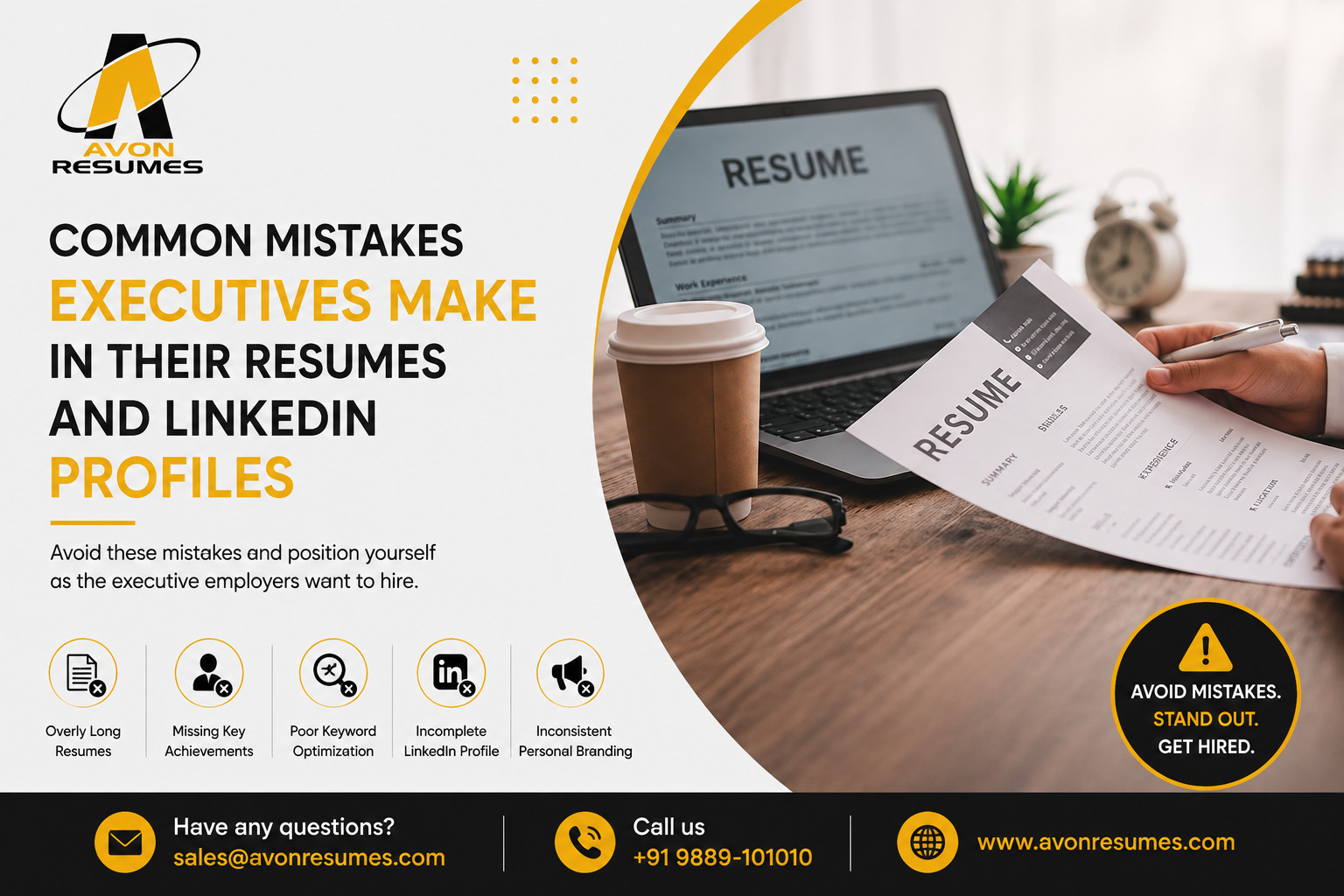
Executives often have years of valuable experience, impressive achievements, and strong leadership capabilities. Yet, even highly experienced professionals can make mistakes when creating or updating their resumes and LinkedIn profiles. A poorly positioned executive profile can make it difficult for recruiters, hiring managers, and business leaders to understand the candidate’s true value.
For senior professionals, a resume and LinkedIn profile should do more than list job titles and responsibilities. They should communicate leadership, strategic impact, expertise, career progression, and measurable achievements. Avoiding common mistakes can significantly improve professional visibility and career opportunities.
1. Focusing Too Much on Job Responsibilities
One of the most common mistakes executives make is creating a resume that reads like a job description. Simply stating that you “managed teams,” “developed strategies,” or “handled operations” does not show the actual value delivered.
An executive resume should emphasize outcomes.
For example, instead of writing:
“Managed a sales team across multiple regions.”
Consider:
“Led a 75-member sales organization across five regions, contributing to 32% year-over-year revenue growth.”
Numbers make leadership achievements more credible and easier for recruiters to understand.
2. Using a Generic Executive Resume
Senior professionals often use the same resume for every position. However, executive hiring is highly competitive, and different leadership roles require different positioning.
A CEO, CTO, CFO, COO, or Sales Director should highlight achievements relevant to the specific position being targeted.
A customized executive resume should emphasize the skills, leadership experience, industry knowledge, and achievements most relevant to the desired role.
3. Writing an Overly Long Resume
Executives naturally have extensive career histories, but including every responsibility from every position can make a resume difficult to read.
A strong executive resume should prioritize the most relevant and impressive experience. Older positions can be summarized when they no longer contribute significantly to the candidate’s current career direction.
The goal is not to document an entire career history. The goal is to communicate professional value efficiently.
4. Ignoring Measurable Achievements
Another common mistake is failing to quantify results.
Executives should demonstrate impact through metrics such as:
- Revenue growth
- Cost savings
- Team size
- Market expansion
- Operational improvements
- Customer growth
- Profitability
- Process efficiency
Instead of saying “Improved business performance,” explain how performance improved and what result was achieved.
5. Using an Outdated Resume Format
A resume may contain excellent information but still look outdated because of poor formatting, excessive graphics, inconsistent fonts, or complicated layouts.
Modern executive resumes should have a professional structure with clear sections, readable formatting, and strong visual hierarchy.
For applications submitted through recruitment platforms, ATS-friendly formatting is particularly important.
6. Having an Incomplete LinkedIn Profile
Some executives maintain LinkedIn profiles that contain only their current job title, company name, and a short employment history.
This represents a missed opportunity.
A strong executive LinkedIn profile should include:
- Professional headline
- Detailed About section
- Career achievements
- Leadership experience
- Skills
- Certifications
- Recommendations
- Relevant featured content
Your LinkedIn profile should tell a professional story rather than simply duplicate your employment history.
7. Using a Weak LinkedIn Headline
Your LinkedIn headline is one of the first things people see. Using only a job title may not communicate enough information.
Instead of:
“Managing Director at ABC Company”
a stronger headline could communicate leadership expertise, industry specialization, and business impact.
A well-written headline can improve profile clarity and help recruiters understand your professional positioning immediately.
8. Ignoring LinkedIn Keywords
Recruiters often search LinkedIn using specific skills, industries, job titles, and areas of expertise.
Executives should naturally include relevant keywords in their headline, About section, experience, and skills.
However, keywords should accurately represent your expertise. Keyword stuffing can make a profile sound unnatural and reduce credibility.
9. Not Showing Leadership Impact
Executives are hired to lead, transform, and create business value. A profile that focuses only on technical tasks may fail to communicate executive-level capability.
Your resume and LinkedIn profile should demonstrate areas such as:
- Strategic planning
- Business transformation
- Organizational leadership
- Revenue growth
- Digital transformation
- Stakeholder management
- International operations
- Change management
Leadership impact should be visible throughout the professional profile.
10. Maintaining Inconsistent Information
Another serious mistake is having conflicting information across the resume and LinkedIn profile.
Job titles, employment dates, achievements, education, and certifications should be consistent.
Small inconsistencies can create questions about accuracy and professionalism. Your resume and LinkedIn profile should present a unified professional story.
11. Neglecting the About Section
The LinkedIn About section is an opportunity to explain who you are beyond your job title.
Executives should use this space to communicate:
- Leadership philosophy
- Professional expertise
- Career achievements
- Industry knowledge
- Areas of specialization
- Professional goals
A compelling About section can make your profile more engaging and memorable.
12. Not Updating Profiles Regularly
An executive’s career can change quickly. Promotions, major projects, awards, certifications, business achievements, and new responsibilities should be reflected on professional profiles.
An outdated LinkedIn profile may give recruiters an inaccurate impression of your current capabilities.
Review your resume and LinkedIn profile regularly to ensure they reflect your latest accomplishments.
How Executives Can Improve Their Resume and LinkedIn Profile
Start by identifying your target career direction. Then review your professional achievements and determine which results demonstrate the greatest leadership impact.
Next, update your executive resume with measurable accomplishments and relevant keywords. Your LinkedIn profile should reinforce the same professional brand while providing additional context.
Consider professional resume writing services or a LinkedIn profile makeover if you need expert assistance with positioning, content, and optimization.
Frequently Asked Questions
1. What is the biggest mistake executives make in resumes?
One of the biggest mistakes is focusing on responsibilities instead of measurable achievements and business impact.
2. How long should an executive resume be?
The ideal length depends on career history and target role. It should contain enough information to demonstrate leadership and achievements without unnecessary details.
3. Should executives customize their resumes for every job?
Yes. Customizing the resume helps highlight experience and achievements that are most relevant to the specific executive position.
4. Why are measurable achievements important?
Metrics demonstrate the actual impact of your leadership and make your accomplishments easier for recruiters to evaluate.
5. Should an executive’s LinkedIn profile match the resume?
The information should be consistent, but LinkedIn can provide additional professional context, content, recommendations, and networking opportunities.
6. What should executives include in their LinkedIn headline?
The headline should communicate your leadership role, industry expertise, specialization, and professional value rather than simply stating a job title.
7. How important are LinkedIn keywords?
Relevant keywords can improve discoverability when recruiters search for specific executive skills, industries, or leadership expertise.
8. Should executives include old jobs on their resumes?
Relevant career history can be included, but older positions can usually be summarized if they are less relevant to the executive’s current career goals.
9. How often should executives update LinkedIn?
Executives should update their profiles whenever they achieve major milestones, change positions, gain certifications, or develop new areas of expertise.
10. Can professional resume services help executives?
Yes. Professional resume writers and LinkedIn specialists can help executives improve positioning, achievement-focused content, ATS compatibility, keywords, and overall professional branding.